Creating My First Web Series
A few things I learned while writing my first episode:
- No idea is truly original anymore.
- Sometimes writing just happens when you put pen to paper…
- …Sometimes it does not.
- Proof read, proof read, proof read.
- Not because you had to rewrite the whole thing doesn’t mean it was bad…does it?
- Do not expect anything you go according to your plan, in five minutes you will change your mind.
- Do not be afraid, or embarrassed to have someone read your work. It will save you more embarrassment later.
- Not all feedback will be good feedback, but it could be good for you.
- Don’t quit.
- See number nine.
There is a tremendous amount of thought, creativity, time and a lot of other ingredients needed to not just come up with a new concept for a series but also to write it. Anyone can have an idea but it takes a lot more to take that idea and make something worth while with it. The biggest issue I faced was coming up with an idea for something that hasn’t been done before. But here is the thing, it has all been done before. The trick is to find a way to show it to the audience in a way it has not been seen before and avoid being piled on with the other cliches. I thought about it, creating a new series is like a creating a recipe for a chicken dinner. Everyone has the same ingredients you do and have made the same mean hundreds of times, but if you have that one extra ingredient that no one else thought to add, you could change the whole meal. In that way, I took this old idea, or this basic recipe, and changed it to create a new effect but the baseline essentially remains the same.
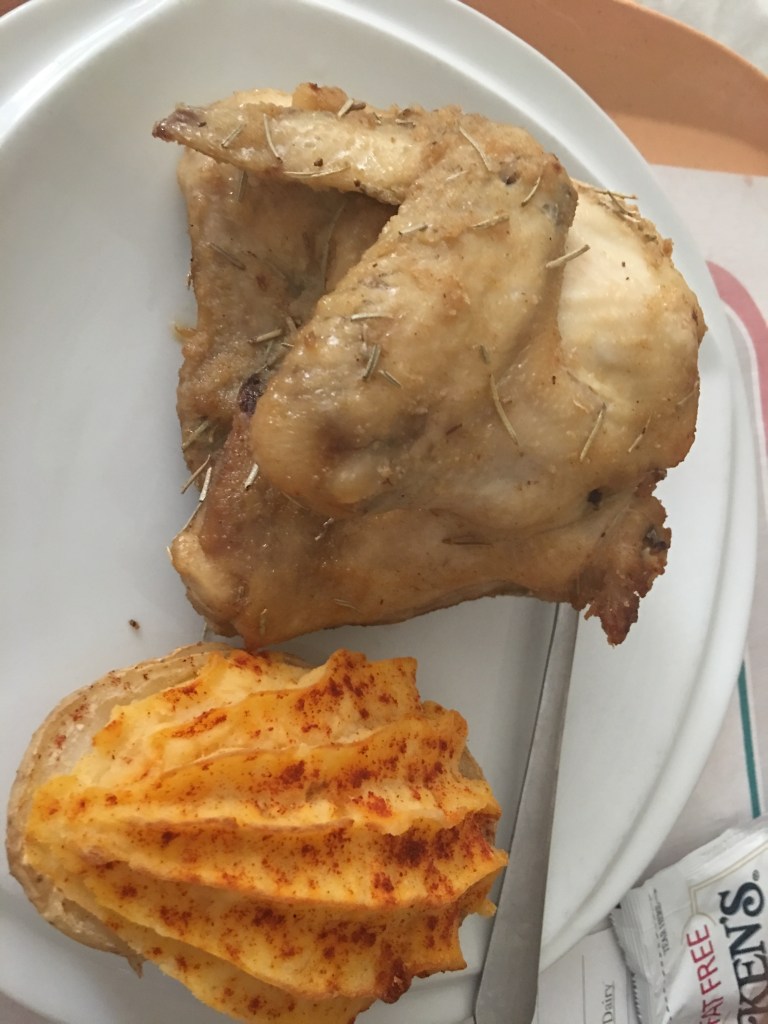
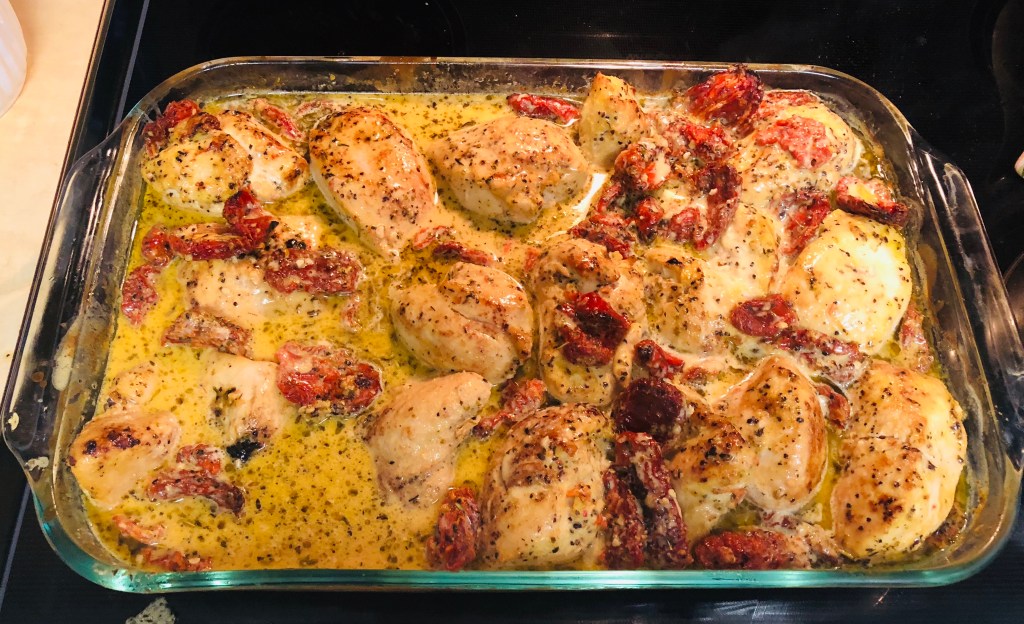
Which chicken would you make?
It was no walk in the park trying to get my idea on paper. I have never been good at creating outlines, or in this case it would be creating a beat sheet. I find my story comes easier when I just write as the words come to me and stop when they don’t. What sounded good as bullet points on paper usually end up somewhere off in the back of my mind and I have completely different idea on paper. Eventually, some of that original thought will trickle back into my writing so I do not stress about it too much. It happens.
I learned that it is OK to change your mind. When it comes to writing scripts, just as in any other story, there will always be rewrites and there will always be a way to make it better. I have to find the way that is the best for me and the story I want to tell and keep rewriting until I am satisfied.
Proofreading is my friend. Proof reading is my friend. That became my mantra after some errors got overlooked in my haste to finish. I found that I catch my mistakes better when I read it out loud (and also that I make a better writer than an actor. Should I be cringing while reading my own writing?) I usually find that there are some things that just sound better in my head and that is OK. Because rewrites are OK, remember.
For me, the biggest difference in writing a script versus writing prose is the format and how the story is told. When writing prose, I have to paint a picture for my readers using words and subtext. Show, not tell, becomes key. That was easy for me. However, when writing script it is very much the opposite. It requires a more specific kind of writing that tells you what to do, and when and how to do it. That was a lot harder than I expected it to be because I had to turn off my natural inclination to follow the rules of prose. However, it is exhilarating to get to the end and realize that the pictures I have imagined in my head could one day be visualized on screen.
I have always dreamed of being a writer, published and with accolades. I had not considered screen/ script writing when I set goals before. Now it sits on a list of possibilities, a potential journey for me to take when I feel comfortable enough to step into that role. For now, prose is still my passion, but dreams can change and skills can be improved. This course has helped me to realize that my skills can extend beyond what I have limited them to. I am open to new possibilities, to new dreams and to new adventures in writing.
One thing I will try to live by, no matter what I am writing, is this thought: to expect perfection is to set yourself up for failure but to strive for perfection will open the doors to success.
Don’t Quit!
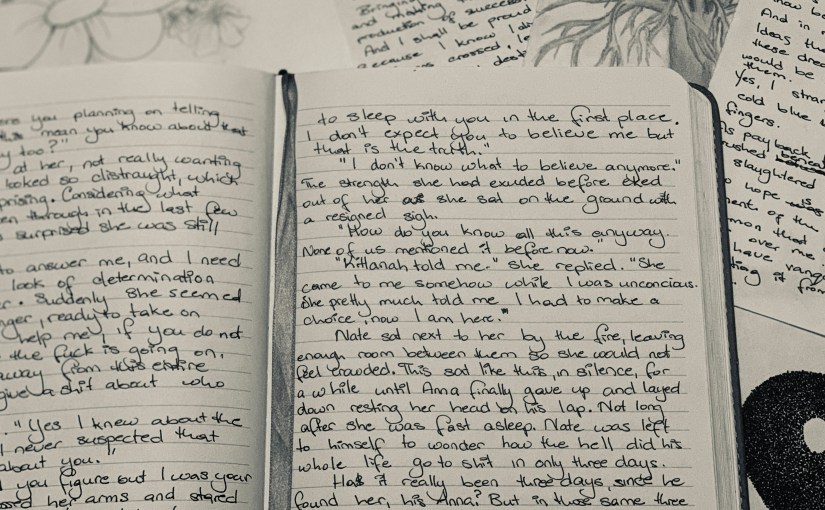
The images shown above are Keeja Fisher originals.
 Keeja Fisher's Mastery Journal